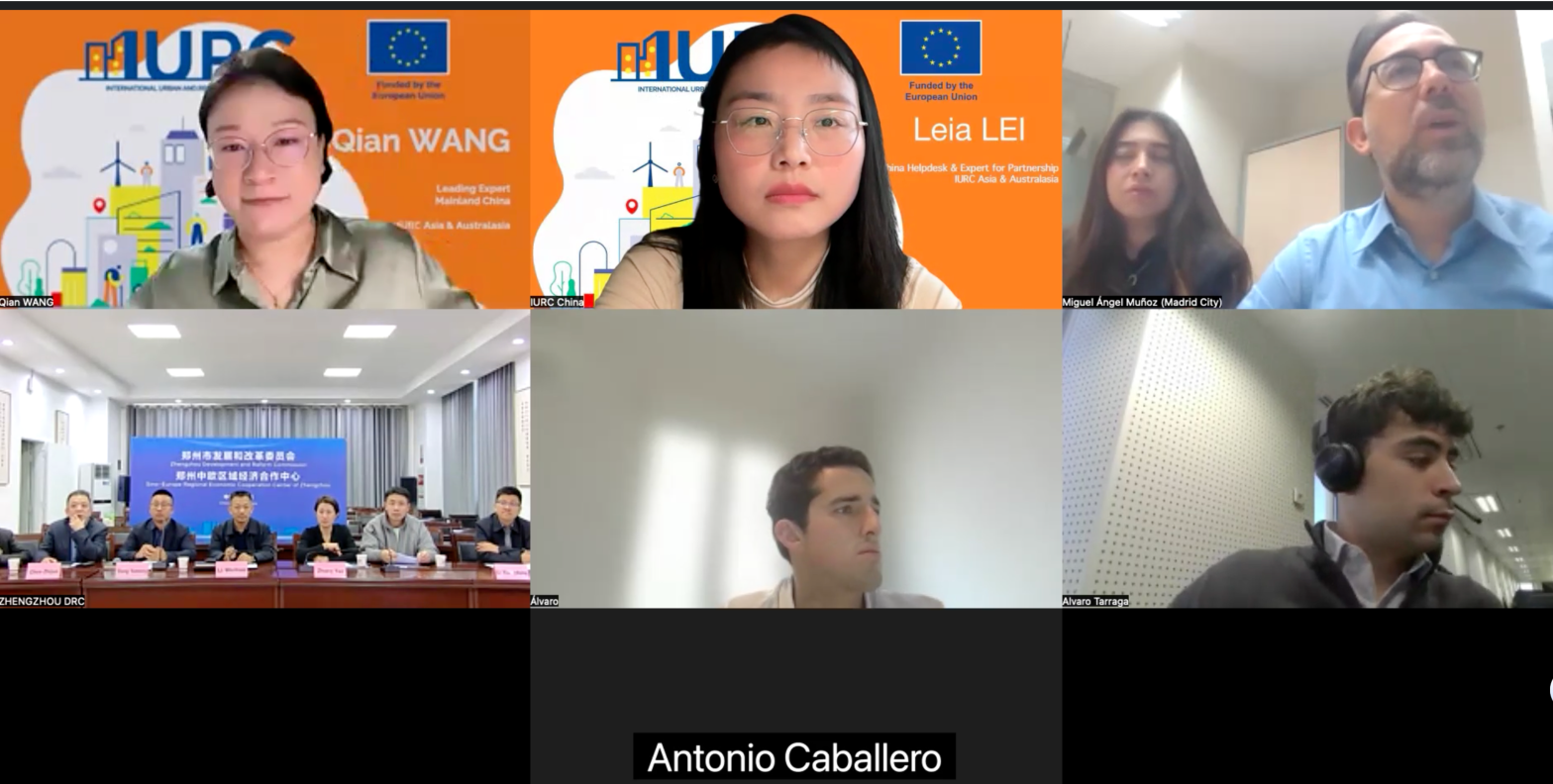
On 28 November 2025, representatives from the City of Madrid and the City of Zhengzhou took part in a dedicated exchange organised by the IURC Asia & Australasia programme. The session explored opportunities for cooperation on circular economy solutions, smart city development, and environmental technologies, with the aim of establishing a structured working framework for future collaboration. Both sides shared detailed insights into their respective strategies, projects, and technological approaches, highlighting strong complementarities in areas such as waste management, intelligent transportation, and sustainable urban systems.
Madrid’s Circular Economy Initiatives
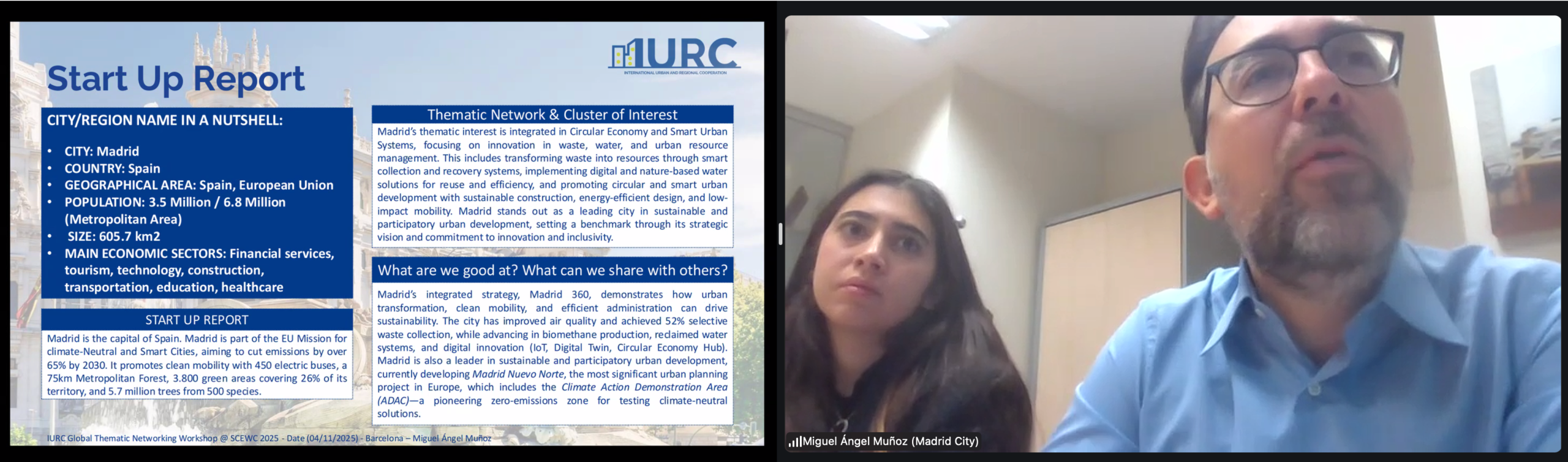
Miguel Ángel Muñoz from Madrid presented the city’s comprehensive circular economy strategy, with a particular focus on advanced waste management practices. These include selective waste collection systems and biogas production at the Valdebebas Technological Park, which contribute to both waste reduction and renewable energy generation. He also described how Madrid is deploying digital twins and artificial intelligence to optimise waste management processes, improve operational efficiency, and support data-driven decision-making.
A key example discussed was the Madrid Nuevo Norte project, one of Europe’s largest sustainable urban development initiatives. The project illustrates how Madrid is integrating climate adaptation measures with waste recovery systems and improvements to water infrastructure, creating a resilient and future-oriented urban district. In addition, Mr. Muñoz outlined complementary initiatives such as noise reduction strategies and policies to increase bicycle use, reflecting Madrid’s broader ambition to enhance environmental quality and liveability across the city.
Zhengzhou’s Smart City and Water Technologies
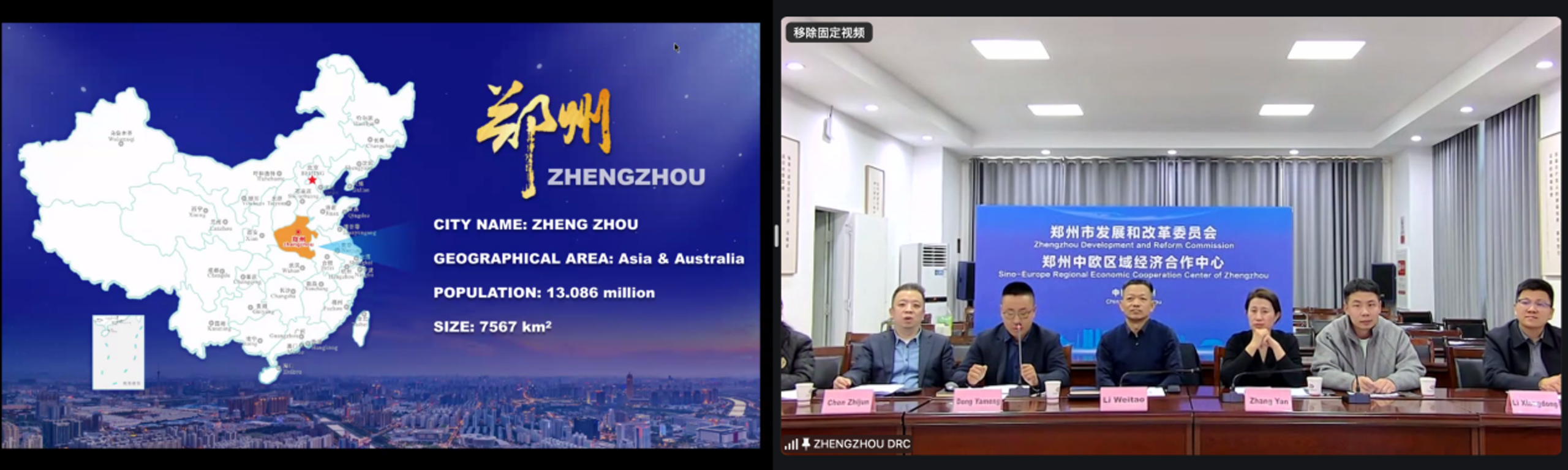
The Zhengzhou delegation presented the city’s rapid progress in smart city development, particularly in the fields of intelligent transportation and water management. As a fast-growing metropolis with a population of more than 30 million, Zhengzhou is investing heavily in advanced technologies to manage urban mobility and public services. The city has achieved notable results in autonomous transportation, including the deployment of autonomous driving systems and drone-based traffic management solutions, positioning Zhengzhou as a leader in transportation innovation.
Zhengzhou also showcased its strong expertise in water and wastewater management. Zhongyuan EP, a national high-tech company based in the city, presented its advanced solutions for wastewater treatment and sludge management. The company’s reclaimed water projects, which generate significant annual cost savings, were highlighted as an example of how circular water use can deliver both environmental and economic benefits. In addition, Zhongyuan EP’s waste heat utilisation system powered by biogas was presented as a practical model of circular economy implementation with potential relevance for collaboration with Madrid.
Next Steps
The meeting concluded with a shared commitment to exchange detailed technical presentations and to organise a follow-up webinar focused on identifying concrete areas for cooperation. Both sides expressed strong interest in continuing the dialogue, noting that the combination of Madrid’s experience in circular economy and urban sustainability with Zhengzhou’s strengths in smart technologies and water management could lead to meaningful, scalable outcomes and long-term collaborative projects.