English (UK)
 Español
 Português
 中文
 日本語
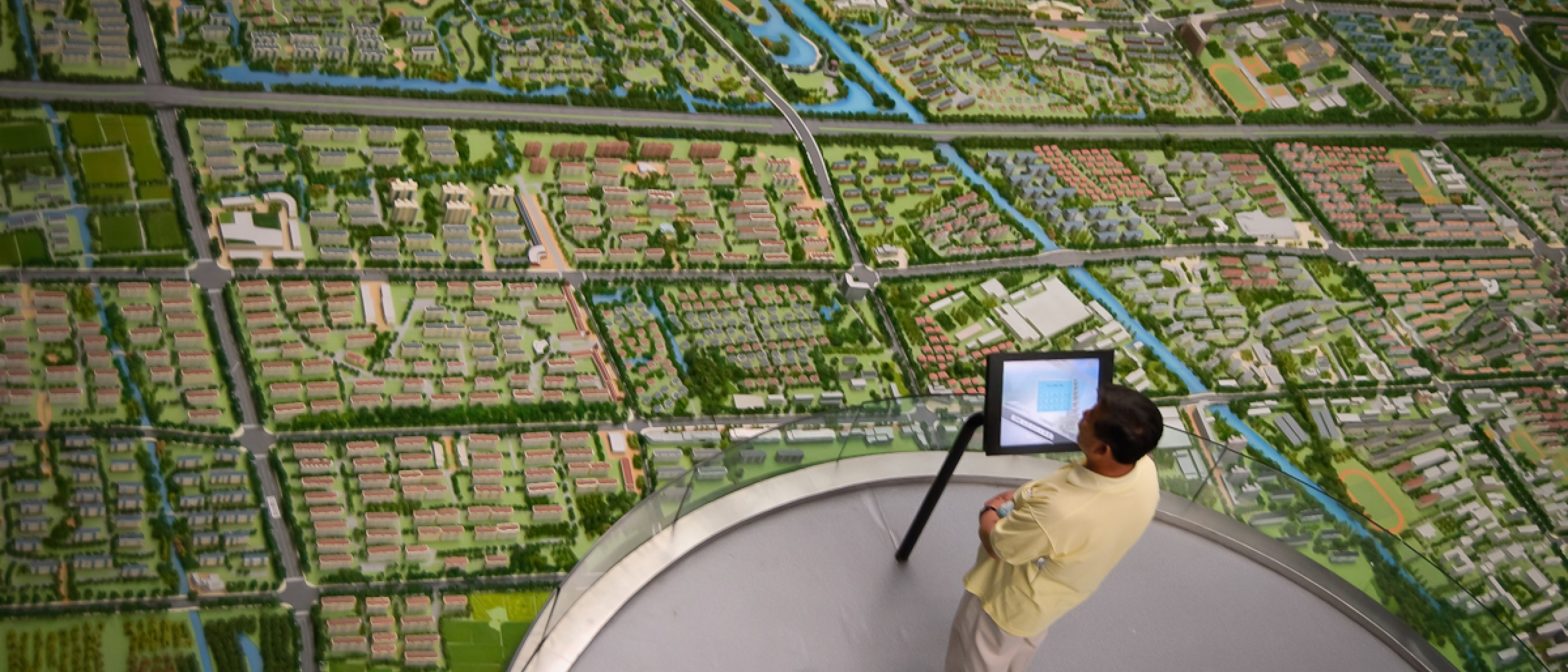
We live in a world facing challenges of resource depletion, climate change and degradation of ecosystems. Nature-based solutions (NBS) and circular economy (CE) can provide tools for transitioning ecosystem services and returning resources to the territory. Both the EU and China adopted the ambitious NBS and CE action plans linking to Sustainable Development Goals, with significant environmental and economic benefits.
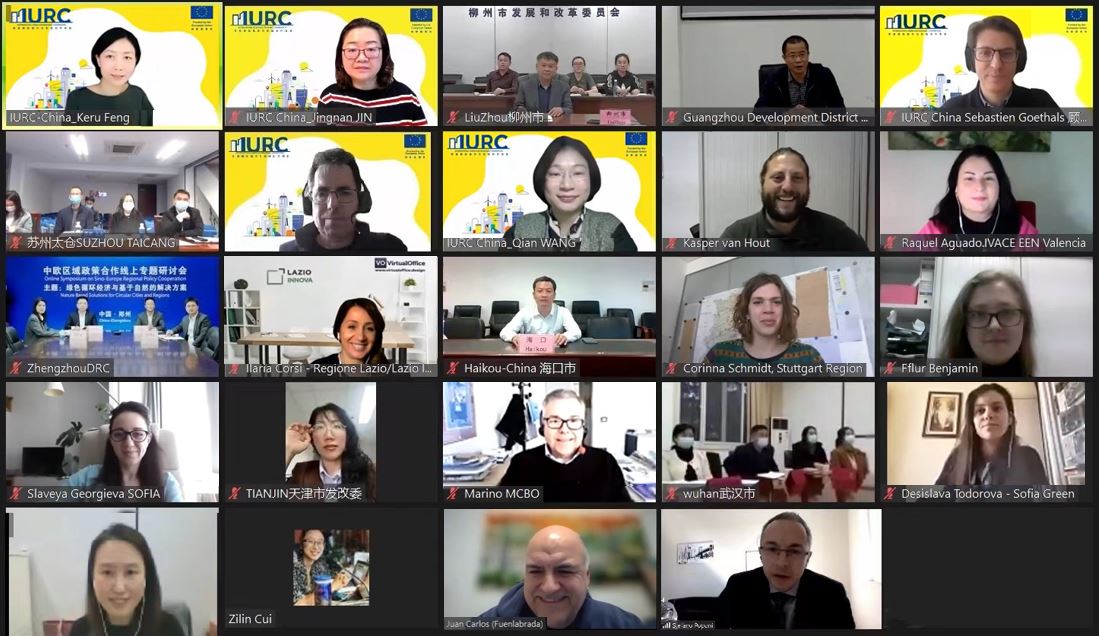
The webinar Nature-Based Solutions and Circularity in Cities and Regions, dated 25 March 2022, is organised as a part of the IURC China thematic cluster working session, aiming to share innovative solutions to enhance the effectiveness of development efforts with nature-based solutions and circular economy transition in cities and regions and discuss how EU-China cooperation can help them to reach the goals. The webinar was attended by over 70 representatives from 23 European and Chinese cities and regions that are ready to work together on nature-based solutions and circular economy.
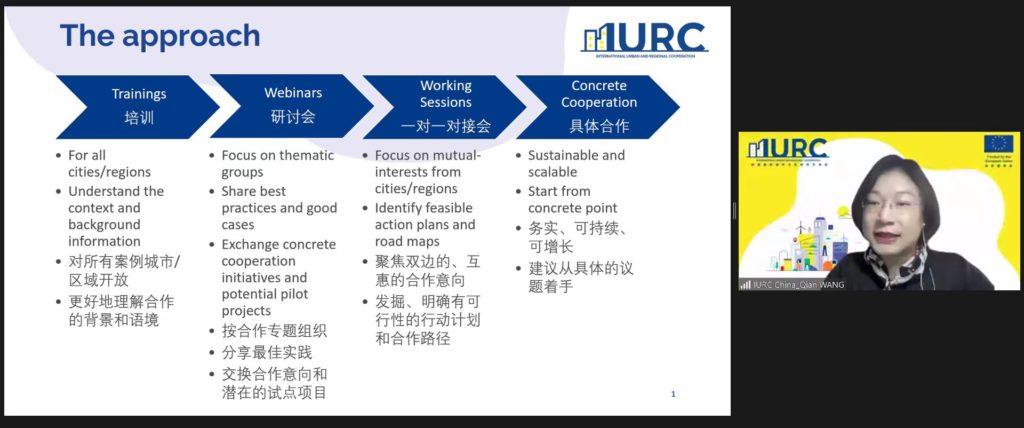
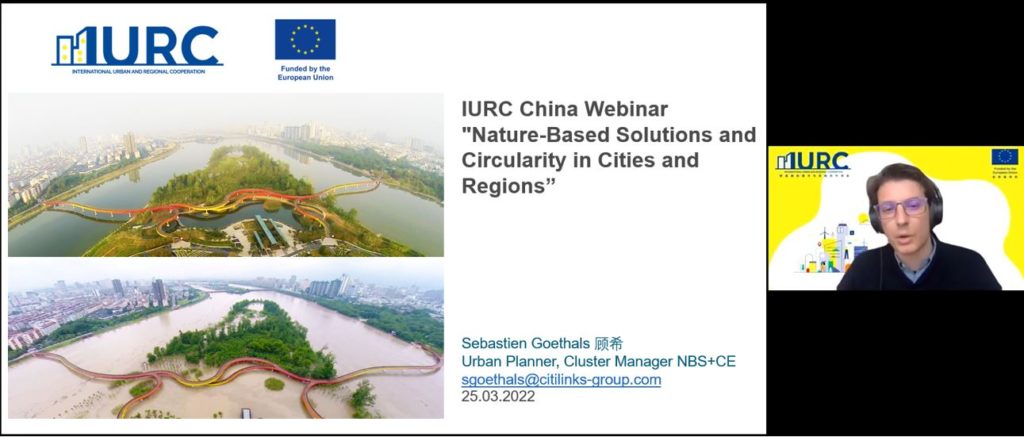
To contextualise the approaches and opportunities of solid EU-China urban and regional cooperation under the framework of IURC, Ms. WANG Qian, the team leader of IURC-China, shared some pertinent information on the implementation of the programme, aligning with the thematic priorities of the cities and regions to build an inclusive and sustainable economy.
Mr. Sébastien Goethals, the expert of sustainable urban development and the cluster manager of NBS and CE in IURC-China, gave a speech setting the scene for the nature-based solutions and circular economy development in EU-China comparative perspective.
Panel I: Nature-based solutions to address environmental and climate changes
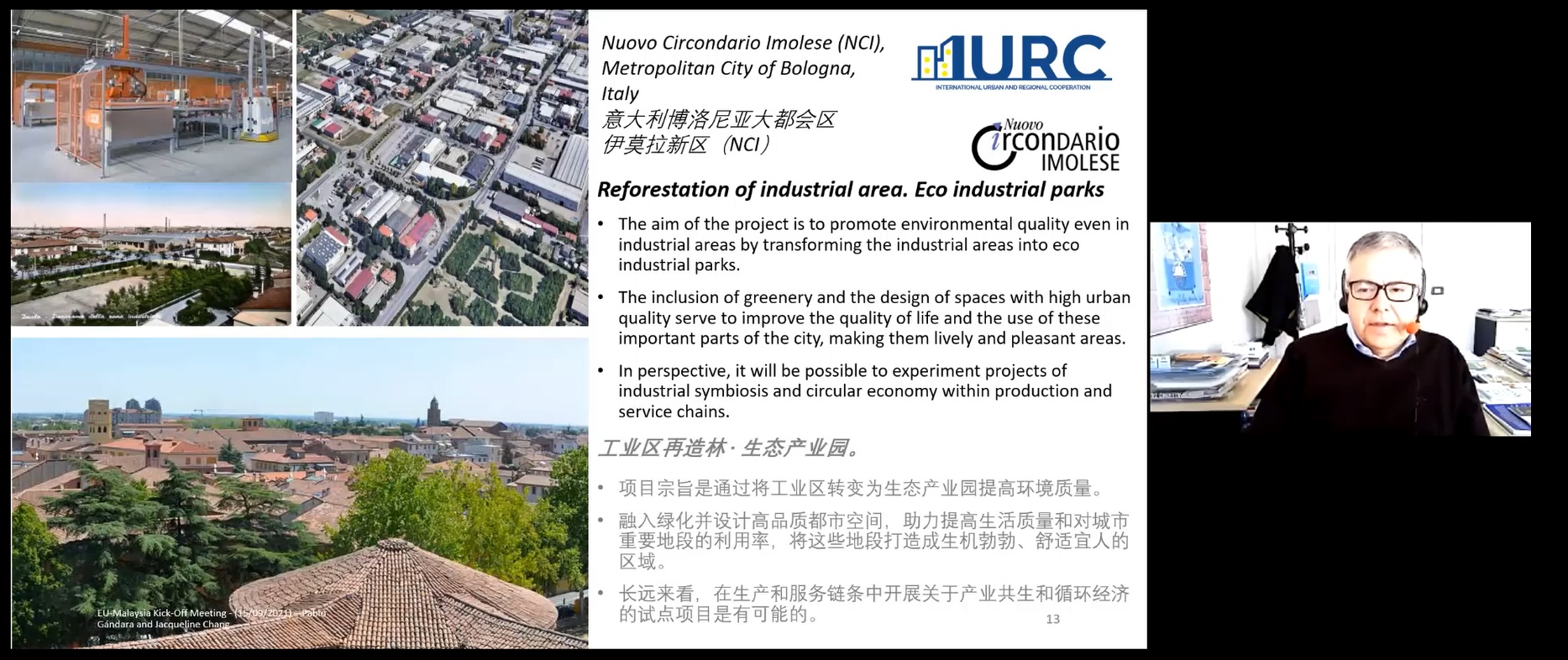
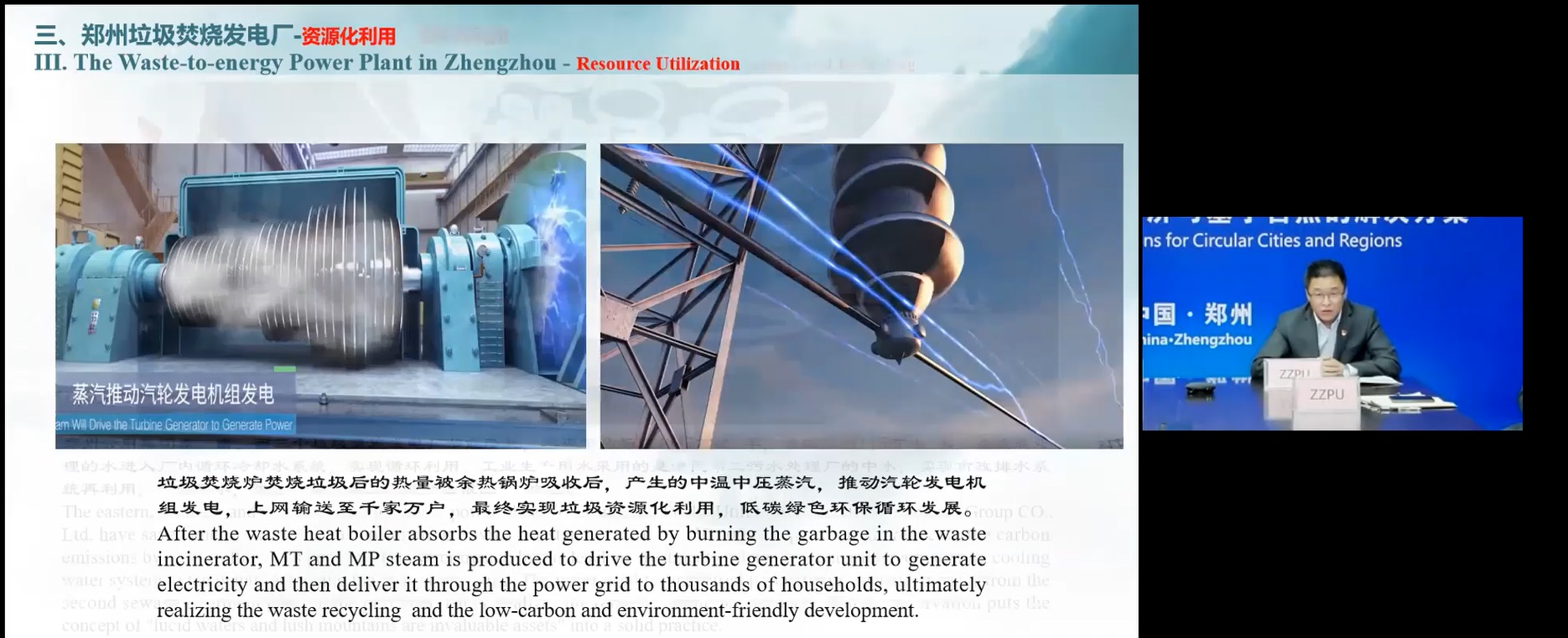
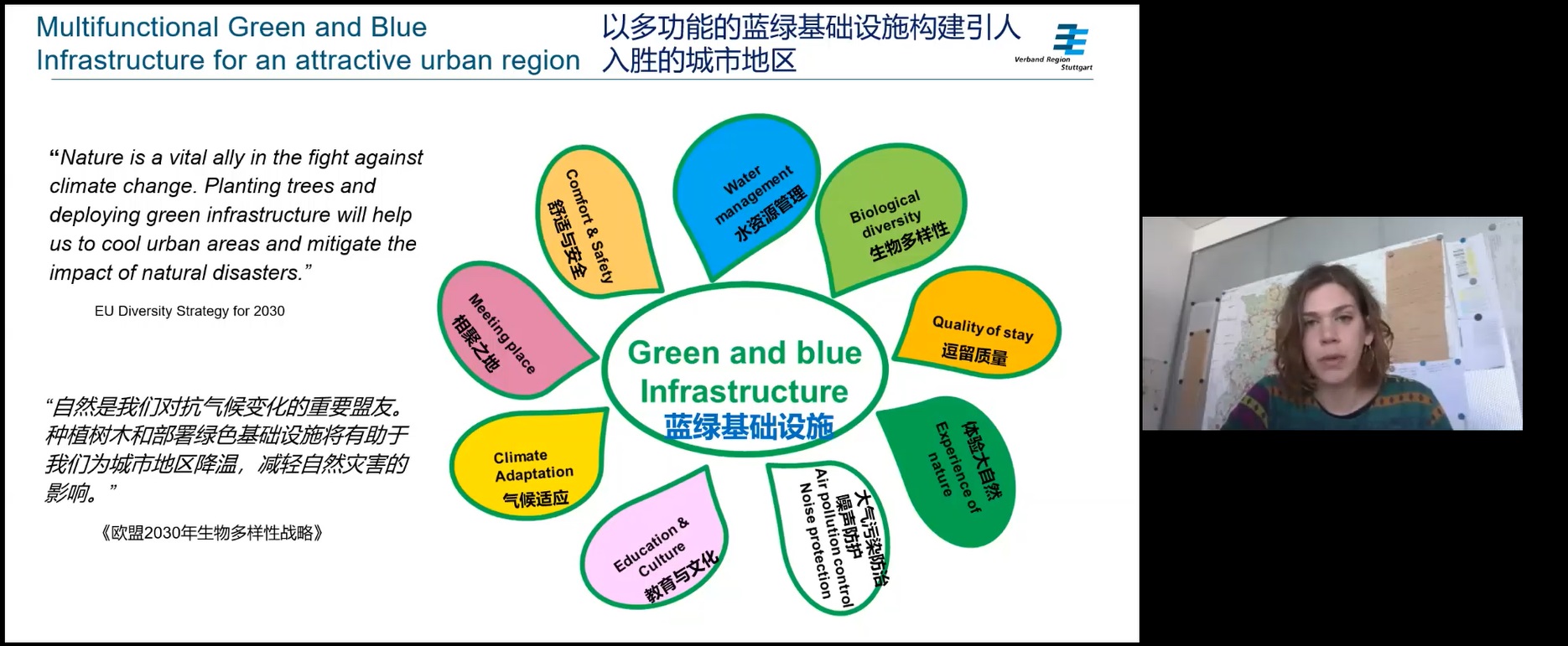
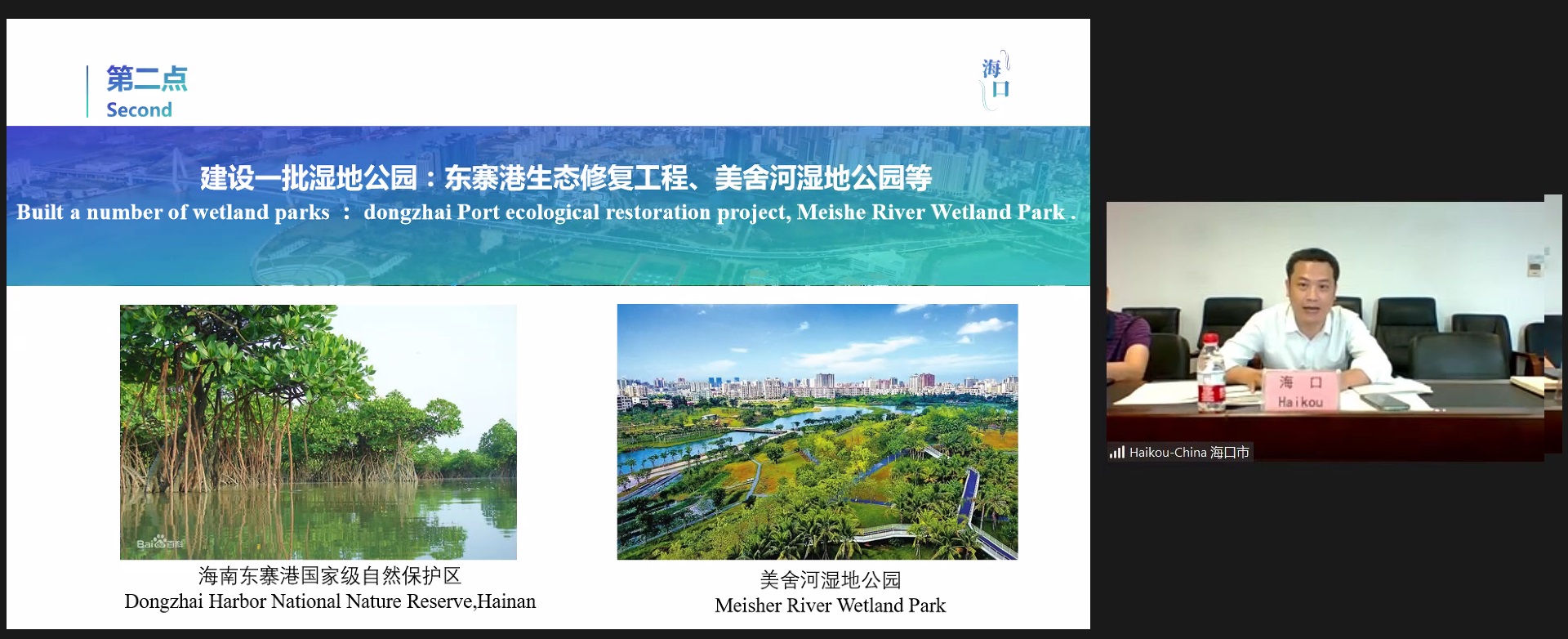
Marino Cavallo from Nuovo Circondario Imolese of Bologna presented the experience of NCI Bologna using nature-based solutions to increase resilience, creativity and social inclusion through green infrastructure development; WANG Weilan shared Zhengzhou´s experience in the waste-to-energy power generation and ecological restoration of landfills; Ms. Corinna Schmidt from Stuttgart region presented the important role of green infrastructure in spatial planning; and Mr. YU Hongzhuo shared Haikou´s green development strategies, highlighting low carbon urban development, ecological restoration, electric vehicle policy, and biodegradable plastic production.
Panel II: Urban and regional circular collaborative economy
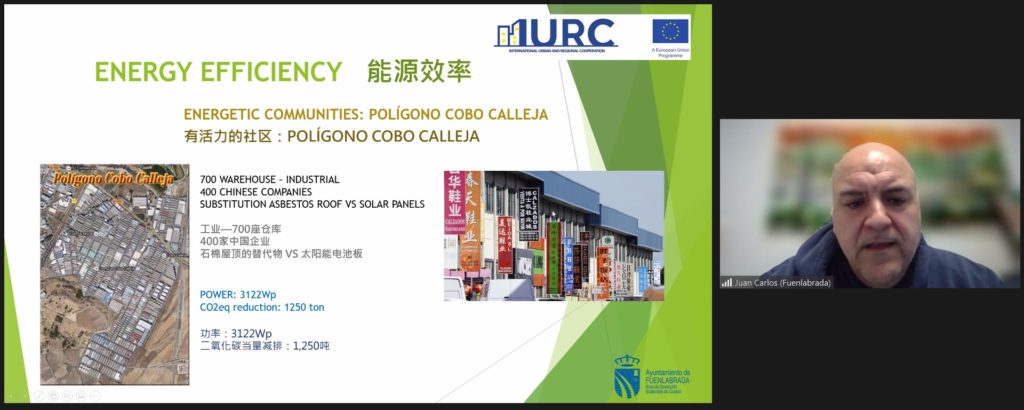
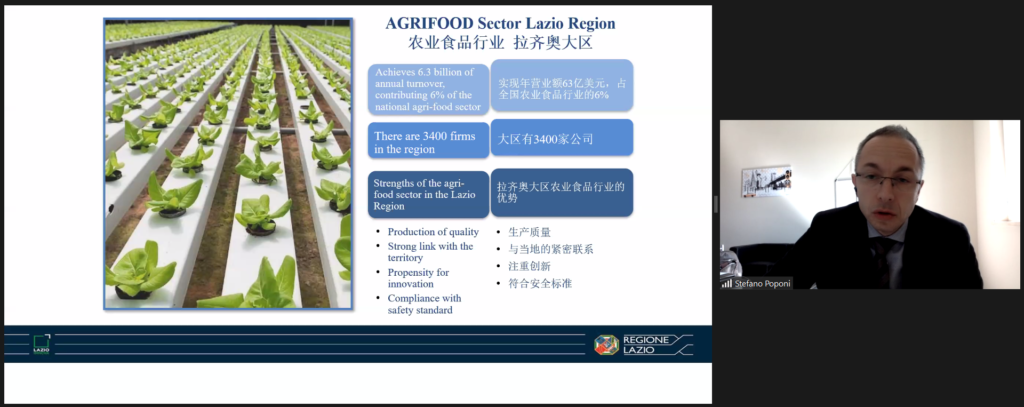
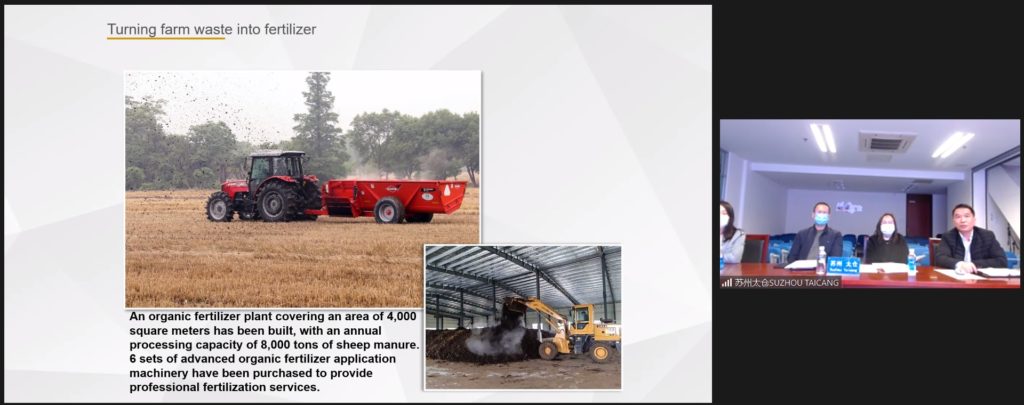
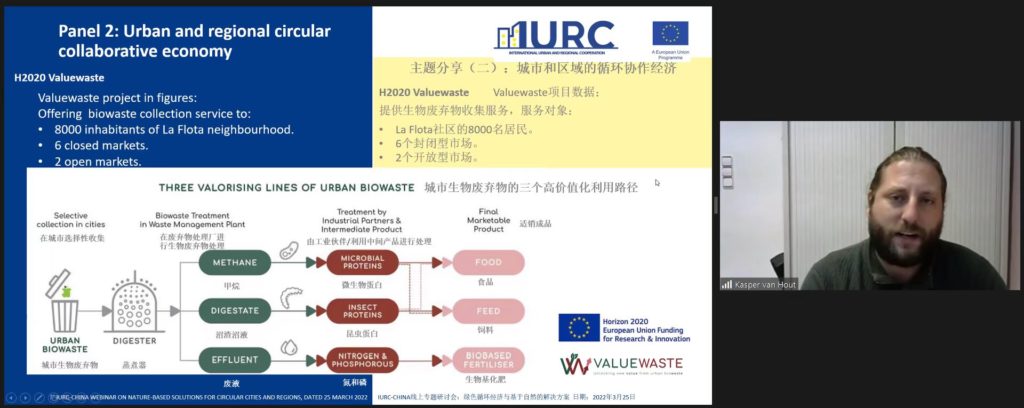
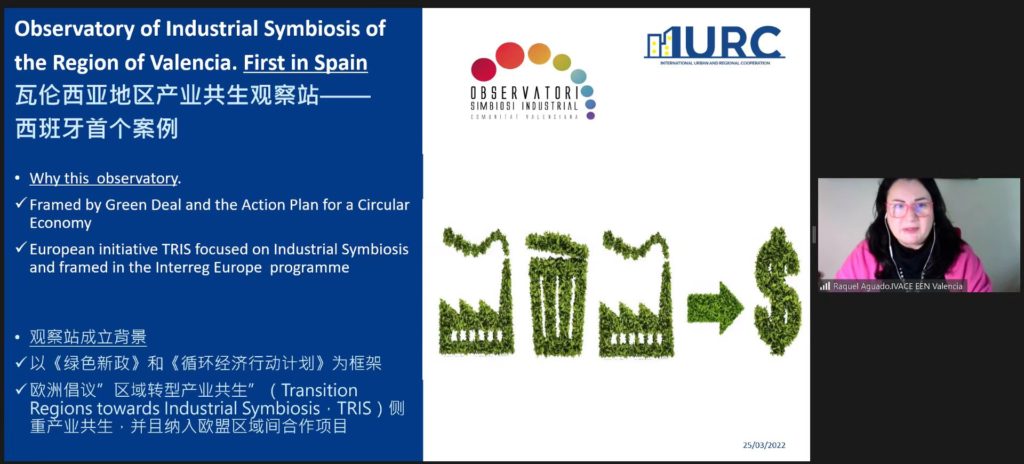
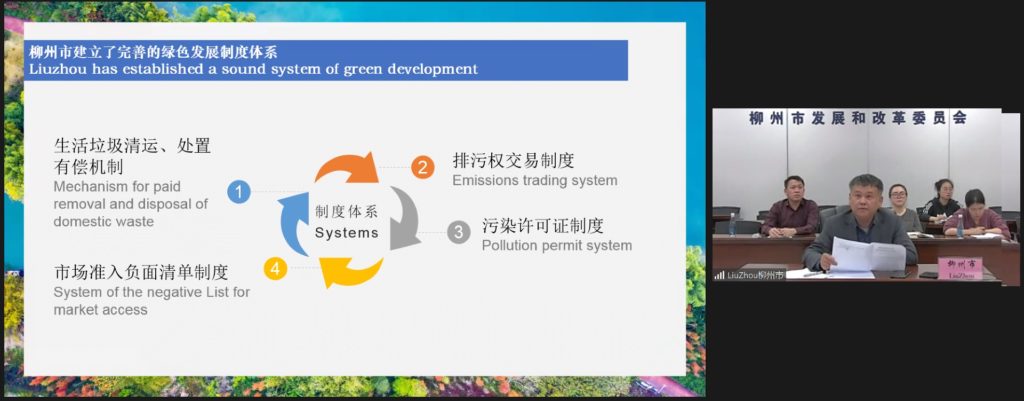
Mr. Juan Carlos Hernandez Navas presented the integrated approach of sustainable development to a green and circular urban environment in the city of Fuenlabrada; Prof. Stefano Poponi shared the circular economy strategies in region Lazio, highlighting the Agrifood sector; Mr. FENG Ruixing presented the circular development model of Taicang city in Suzhou, underlining the Agriculture sector; Mr. Kasper van Hout gave a comprehensive introduction on the inclusive circular economy strategy in the city of Murcia; Ms. Raquel Aguado Muñoz, shared the best practice in the Industrial Symbiosis and related EU pilot project for cross-regional cooperation in the Region Valencia; Mr. YANG Zhuangzhi talked about the innovative approach for the green and circular economy in Liuzhou. In addition, the city of Yangzhou shared their circular strategies in land use, waste management, resource and energy efficiency etc.
Ms. WANG Qian, Team Leader of IURC-China, concluded that beyond sharing good practices, finding common grounds among EU-China cities and regions to implement pilot projects is the key priority for IURC-China.
Through this thematic network webinar, the cities and regions shared good practices, demonstrated leadership in actions, and inspired cross-border cooperations in IURC-China. The event was moderated by Ms. FENG Keru from the IURC-China team.