 English (UK)
  Español
  Português
  中文
中文  日本語
日本語 
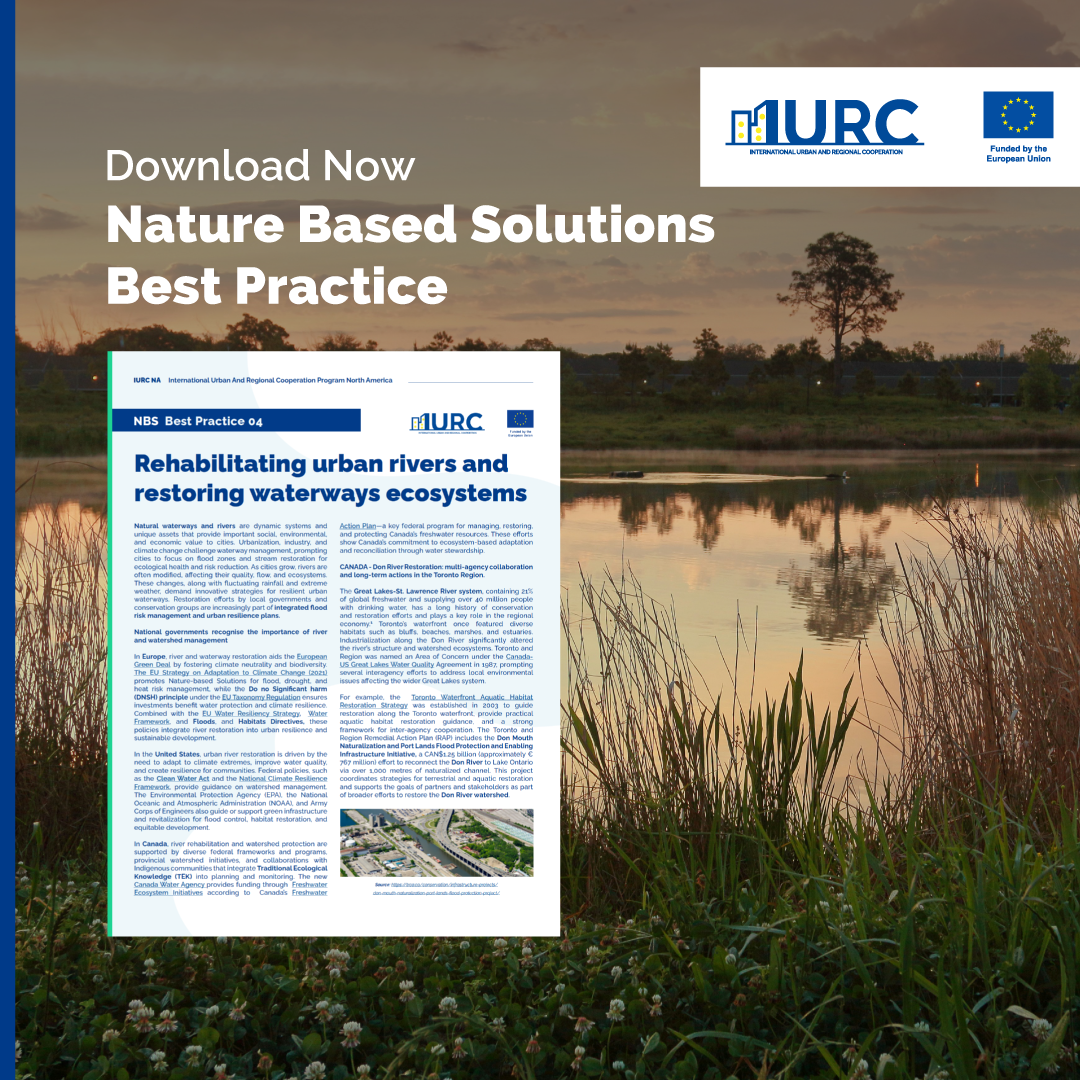
Cities across North America and Europe are increasingly using Nature-based Solutions (NbS) to rehabilitate urban rivers, reduce flood risk, and restore degraded waterway ecosystems. As climate change and urbanisation intensify pressures on waterways, river restoration is becoming a key component of integrated flood risk management and urban resilience strategies.
Strong policy frameworks support this shift. In Europe, river restoration contributes to the European Green Deal and EU climate adaptation policies. In the United States and Canada, federal programmes and watershed initiatives promote green infrastructure, ecosystem-based adaptation, and community resilience.
Recent Best Practice examples highlight the impact of these approaches:
- Toronto, Canada – The Don River Restoration and Port Lands Flood Protection project reconnects the river to Lake Ontario, delivering flood protection while restoring habitats along the waterfront.
- Łódź, Poland – A blue-green network along the Sokołówka River improves stormwater management and creates new recreational spaces.
- Chicago, USA – Conservation-led initiatives such as floating wetlands and the Wild Mile are transforming industrial waterways into vibrant ecological and community assets.
Together, these initiatives demonstrate how working with nature can deliver multiple benefits for cities, including cleaner water, increased biodiversity, and more resilient, liveable urban environments.
📘 Read the full Best Practice to learn how cities are using Nature-based Solutions to restore rivers, manage floods, and improve biodiversity.